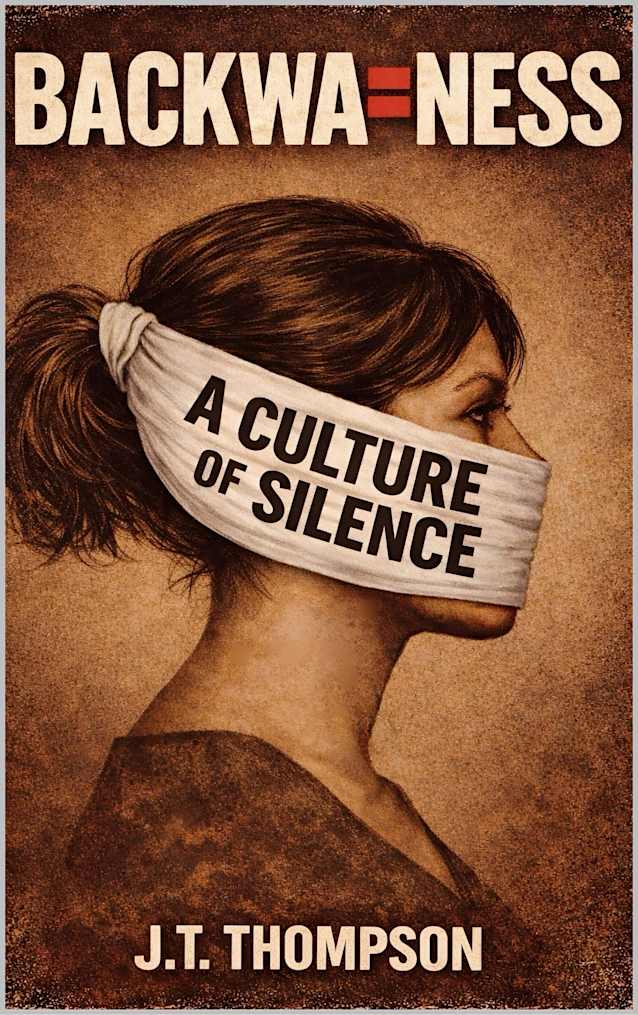
Backwardness: A Culture of Silence
About
Jeffrey Epstein is dead. Ghislaine Maxwell is in prison. And the system that made
them possible is still fully operational.
Backwardness: A Culture of Silence is not another book about a monster. It is
a book about the institutional machinery that protected him — and the legal, cultural,
and financial architecture that continues to protect the next one.
Written by a U.S. Army combat medic, harm reduction advocate, and author of the memoir
First, Do No Harm, this book applies the rigorous logic of a medical
morbidity and mortality conference to one of the most documented institutional failures
in modern American public life. The diagnosis is precise. The treatment plan is specific.
The evidence is already in the public record.
What you will find inside:
- A detailed reconstruction of the 2007 non-prosecution agreement — what it protected,
who it immunized, and what it made impossible
- A close examination of why the law punishes the rape of a child less severely than
murder, and how that hierarchy was built rather than discovered
- Survivor testimony from the August 2019 federal hearing — in their own words,
on the record — documenting what they asked for and how many times the system
received that signal and turned down the volume
- An international comparison of how Australia, Germany, Ireland, Canada, and
others confronted institutional child sexual abuse — which countries changed the
protocol, which held the conference and produced nothing, and what the control
group data shows
- A station-by-station examination of the broken chain of care: the banks, the
universities, the lawyers, the oversight institutions, the press, and Congress
- A concrete, five-pillar treatment plan — legal reforms, prosecutorial reform,
institutional restructuring, economic consequences, and cultural change — each item
corresponding to a documented gap in the existing system
- A moral reckoning with the inversion at the heart of this case: why the people
the formal system calls irredeemable so often recognized the moral reality of these
crimes with greater clarity than the institutions built to stop them
This book does not pretend neutrality about whether children should be protected
from adults who traffic, exploit, or sexually violate them. It does aim for
evidentiary discipline in every factual claim it makes. Every assertion is tied to
a record. Every argument is accountable to evidence.
The archive is built. The pattern is established. The treatment plan is written.
The answer to the backwardness of our past is not found in the pages of these
files. It is found in the forward momentum of the person who just finished reading
them.
For readers of Perversion of Justice by Julie K. Brown,
Catch and Kill by Ronan Farrow, and Trauma and Recovery
by Judith Herman.